Nearest airports
Florence and Pisa, or Rome for nonstop US flights

Italy · Tuscany
Tuscany is not one destination but four or five, spread across an area you cannot cross in an afternoon. Choosing the right one is most of the job. We plan, design and direct weddings across the region for couples arriving from abroad.
Florence and Pisa, or Rome for nonstop US flights
Mid May to June, September to mid October
Exclusive use of an estate, three nights minimum
Twelve to eighteen months
Tuscany gives you the thing Lake Como and the Amalfi Coast cannot: space, and time. Weddings here are held on private estates taken for several nights rather than for a day. Guests sleep on the property or fifteen minutes from it, meals stretch, and the celebration has room to be three days long without anybody changing hotel.
The landscape is also the least crowded of the famous Italian settings. A cypress avenue in the Val d’Orcia in late September is a place where nothing hurries, and that is the actual product: not a backdrop, a pace.
Five areas, and the distance between them is the reason the choice matters.
Most estates work on an exclusive use model with a minimum stay, frequently three nights. That single fact shapes a Tuscan budget more than anything else, and it is also why a Tuscan wedding tends to feel like a house party rather than an event.
Chianti, between Florence and Siena
Wine estates and stone borghi, the classic Tuscan picture. Borgo San Felice at Castelnuovo Berardenga, Villa Cetinale near Sovicille, Castello di Casole. Forty five minutes to an hour from Florence.
Val d’Orcia, south of Siena
The most photographed landscape in Italy: Pienza, Montalcino, Montepulciano, La Foce, Rosewood Castiglion del Bosco. Two hours from Florence, and worth the drive when the landscape is the point of the wedding.
The Florentine hills
Belmond Villa San Michele in Fiesole, Villa Corsini a Mezzomonte, Villa di Maiano. Fifteen to thirty minutes from the city, formal gardens, and the option of putting guests in a Florence hotel.
The Maremma and the deep south
Castello di Vicarello and the estates around it. Wilder, hotter, quieter, and closer to the sea than anywhere else in the region.
The Valdarno and the east
Il Borro, where an entire restored village is taken for exclusive use. The format that suits a large multi day guest list best.
Mid May to the end of June, and September into the first half of October. July and August reach the mid thirties Celsius in the afternoon and the countryside offers no relief: a ceremony at four in the afternoon in July is unkind, and a ceremony at seven is entirely fine.
September brings the vendemmia. Working wine estates are harvesting, which affects availability, access to parts of the property, and occasionally the noise and truck traffic during the day. That is a reason to ask the estate what is happening that particular week, not a reason to avoid the month. The first two weeks of October are the region’s least discussed window: warm days, cool nights, vines turning colour, almost no tourists.
Across Italy, the weddings we plan generally sit between roughly 50,000 and 500,000 euros and beyond. That is an indicative market range and not a price list: each project is quoted on its own scope.
Tuscany sits in the middle to upper part of that range, and the shape of the spend differs from Como or the coast. The venue is usually a multi night rental rather than a day rate, so a large part of your budget is also housing your guests. Catering is brought in and built from nothing, because most estates have no restaurant kitchen running at that scale.
The two costs couples underestimate are transport and staff. Estates are far apart and far from town, so every movement is a coach or a fleet of cars, and a property with no permanent event staff needs a full production team on site for three days rather than for one evening.
A civil marriage is legally binding in the United States. It requires a sworn declaration of no impediment before the United States consulate in Italy, an atto notorio where the comune asks for one, apostilled birth certificates, sworn translations, and appointments at the comune before the ceremony. Tuscan comuni are small, their offices are not open every day, and the town hall serving your estate may belong to a village of two thousand people.
A symbolic ceremony carries no legal effect and no paperwork, and it is the route most of our American couples take: married at home in a short courthouse appointment, then a ceremony under the cypresses with a celebrant of their own choosing. A Catholic ceremony runs through your home parish and the local diocese. Rural parish churches here are beautiful and small, and the number of guests they hold often decides the shape of the whole day.
We assemble and track the file and sit in the appointments with you. The practice belongs to the comune and the consulate, and we send you to both, because the requirements move.
There is no nonstop flight from the United States to Florence or Pisa. Guests connect, usually through Rome, Milan, Paris, Frankfurt, Amsterdam or London. Florence Peretola is small and its runway limits aircraft size. Pisa is about an hour from Florence by road. Bologna is under forty minutes from Florence by high speed train and frequently has better connections than either. Rome Fiumicino is around three hours from Chianti by road and is the right answer for guests who want a single flight.
On the ground, everyone drives or is driven. Estates are thirty to sixty minutes apart, the last three kilometres are frequently a gravel strada bianca, and the nearest town with a pharmacy may be twenty minutes away. None of that is a warning, it is a planning input that belongs in the timeline from the start.
The Tuscan model differs from the rest of Italy. The estate houses thirty to sixty of your guests, and everyone else goes into agriturismi, villa rentals and small hotels within a twenty minute radius. In practice that means five or six small blocks rather than one, and a shuttle map instead of a shuttle.
It also means the wedding becomes a stay. Guests arrive on Thursday, and by Saturday they have eaten three meals together and the room already knows itself. That is the real argument for Tuscany, and it is worth building the accommodation plan around it rather than treating it as administration.
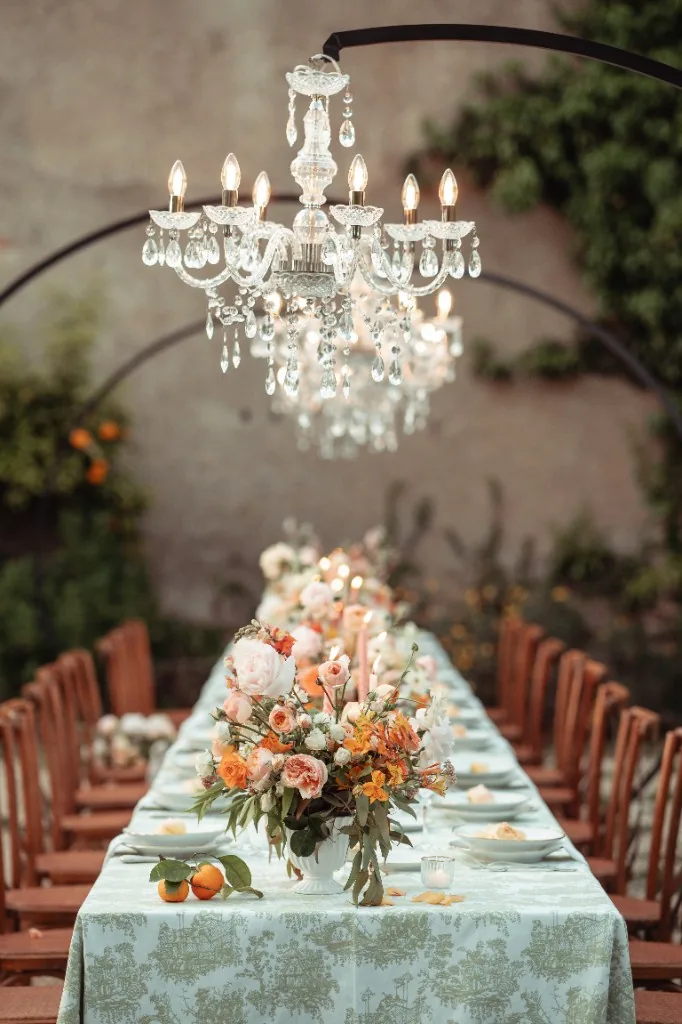
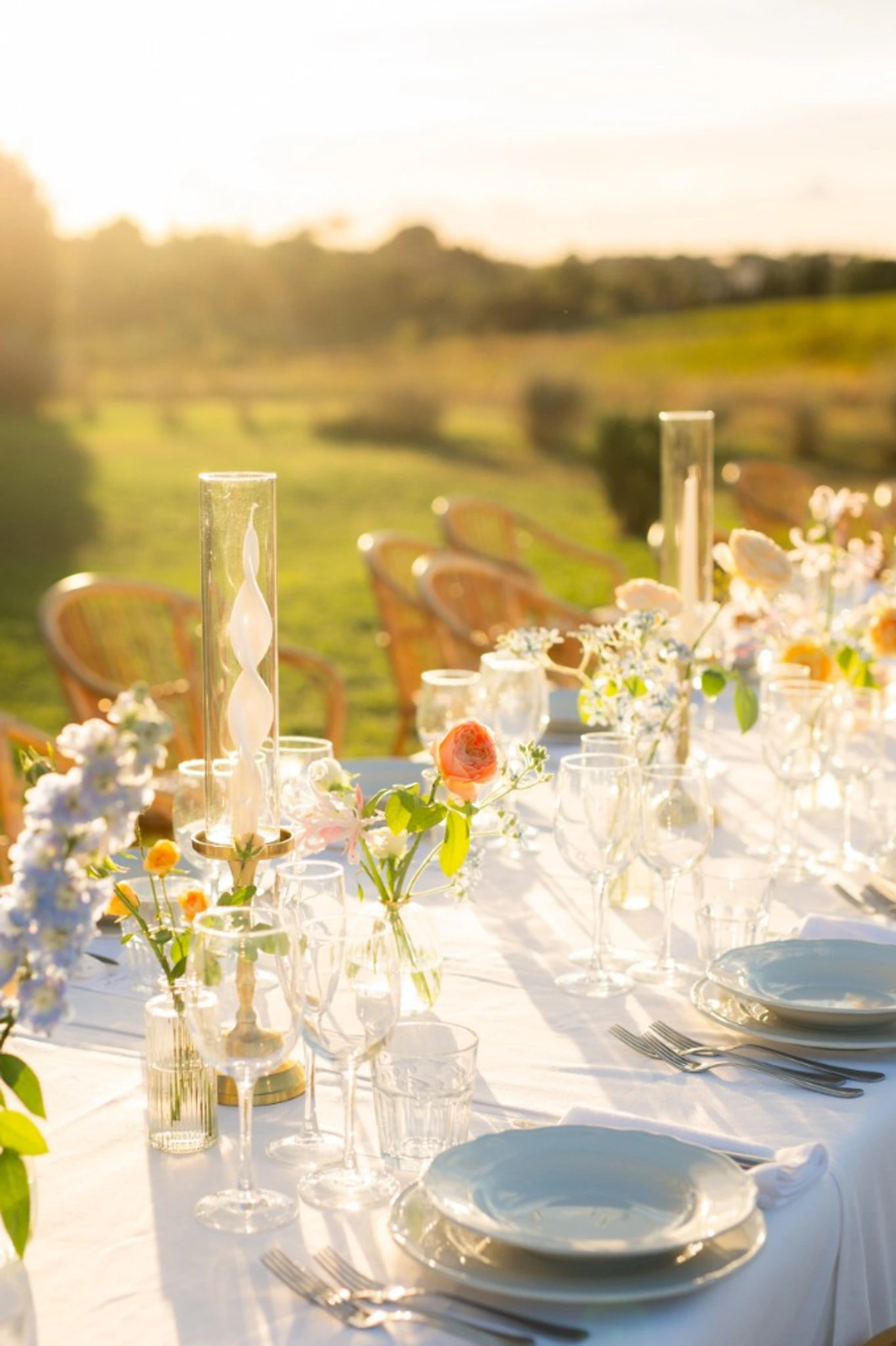
Projects from our Italian portfolio, designed around long tables, countryside light and multi day guest rhythm.
Casale Malatesta, Italy
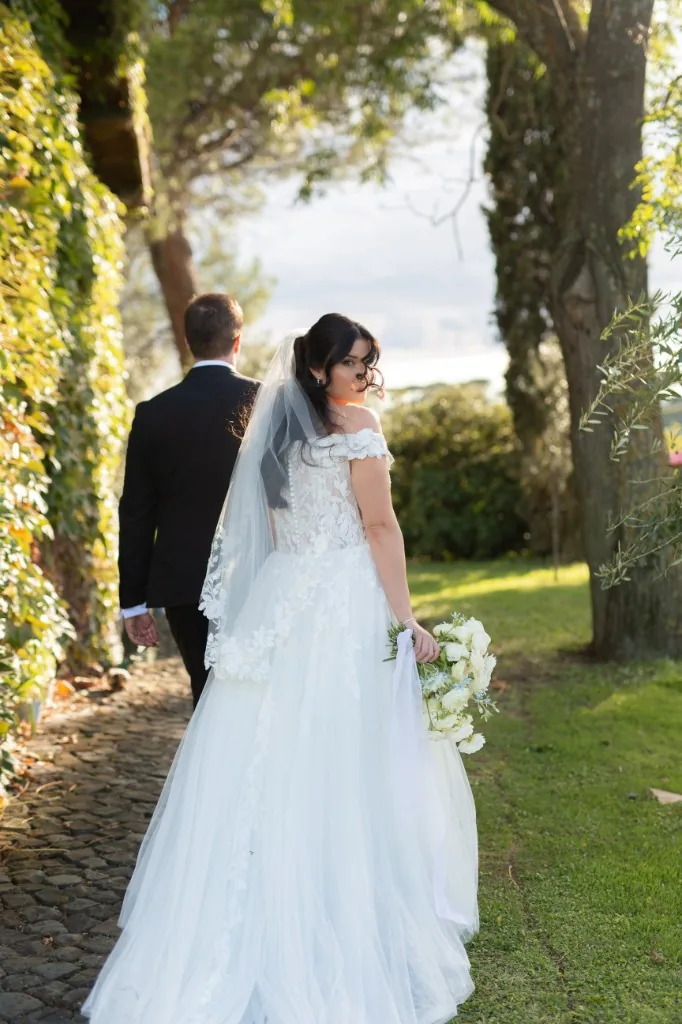
Casale del Gallo, Rome
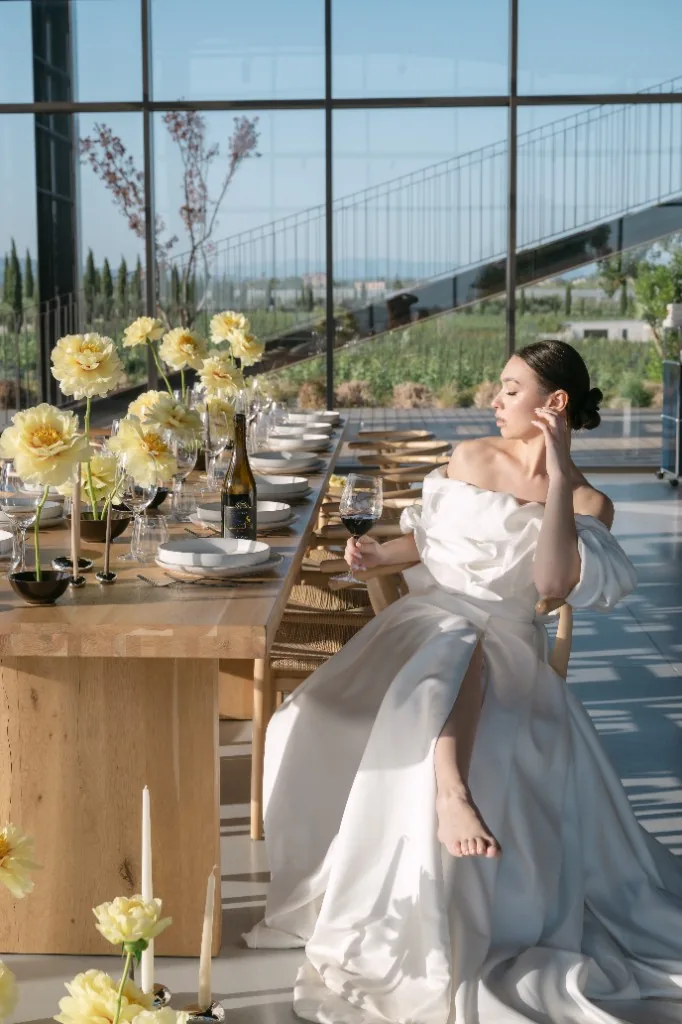
Latina, Italy
More projects in the portfolio, and the full scope of what we take on is set out under services.
What couples ask before choosing Tuscany over the lakes or the coast.
Usually, yes. Most Tuscan wedding venues work on exclusive use with a minimum stay of two or three nights. It sounds expensive until you count the bedrooms, at which point it frequently compares well with a day rate somewhere else plus a hotel block.
Chianti is about three hours by road from Fiumicino and the Val d’Orcia is around two and a half. For guests flying nonstop from the United States, arriving into Rome and driving up is often easier than connecting into Florence.
June is greener, longer and more reliable. September is warmer in colour, quieter, and coincides with the grape harvest, which some couples love and which occasionally affects which parts of an estate you can use. We ask the property directly before recommending a week.
Three, and Tuscany is the one destination where a fourth genuinely improves the experience rather than stretching it. Arrival and a welcome dinner, the wedding day, then a long lunch before people scatter.
Not really, and they should not try. We plan transport for every scheduled moment and arrange drivers for anything outside it. Guests who want independence should rent a car at the airport rather than at the estate.
Hot and dry, regularly in the mid thirties Celsius in the afternoon. It is manageable with a late ceremony, shade, water and a timeline built around the light rather than around the clock.
Twelve to eighteen months. The estates with the views hold a small number of Saturdays each season, and the strongest are booked earliest for late May, June and September.
Further answers on planning, timelines and how we work are on the FAQ page.
Where else we work
An overview of every destination sits on the weddings page.
If Tuscany is where you want to marry, the first question is which Tuscany, and the second is how many nights.
Start Your EnquiryWe use cookies to improve your experience and to measure the performance of our advertising. You can accept all cookies or choose only the necessary ones. Privacy Policy & Cookie Policy